At the beginning of the interview, Prof. Dr. Kronenberg explained how citizens' voting behavior in the recent local elections in North Rhine-Westphalia could be classified. While for some voters, the “local work” of politicians was relevant to their voting behavior, some voters also voted in protest—especially AfD voters. Furthermore, the CDU's election victory was the result of “cross-milieu and cross-party” support for Minister President Hendrik Wüst, who had established effective and responsible cooperation with the Greens at the state level. However, Prof. Dr. Kronenberg also pointed to the AfD's historic election victory in North Rhine-Westphalia. The latter benefited enormously from the “structural policy problems” in the Ruhr region, formerly a stronghold of social democracy. Even though the AfD lacked the necessary votes to appoint mayors in North Rhine-Westphalia, it increased its seats in city and municipal councils, according to the political scientist.
Prof. Dr. Volker Kronenberg's assessment of the results of the local elections in North Rhine-Westphalia on Phoenix Prof. Dr. Volker Kronenberg's assessment of the results of the local elections in North Rhine-Westphalia on Phoenix
On September 15th, political party expert Prof. Dr. Volker Kronenberg analyzed the results of the local elections in North Rhine-Westphalia on the Phoenix der Tag television program.
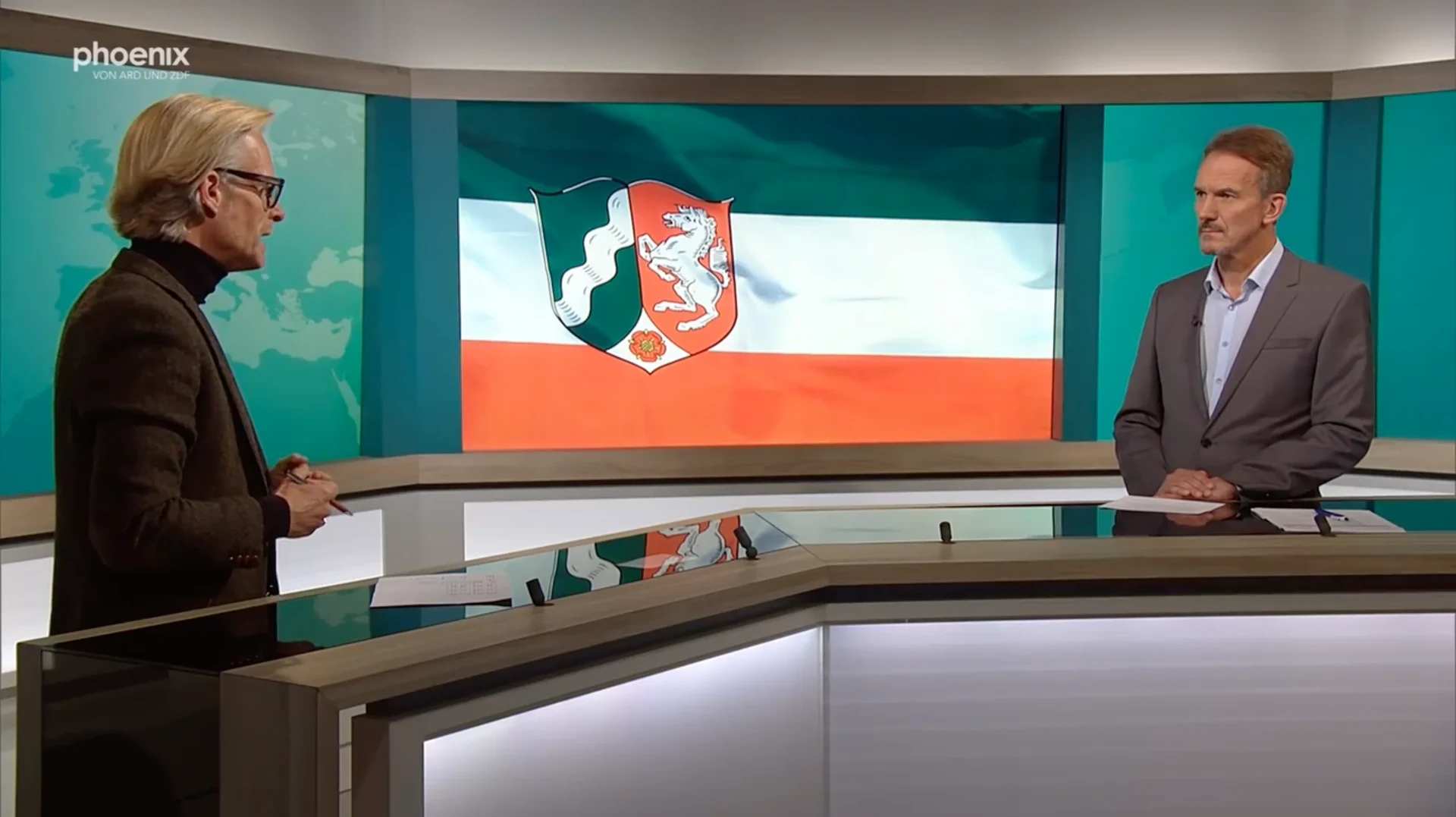
Prof. Dr. Volker Kronenberg in the television program Phoenix der Tag on September 15th.
© Phoenix
Download all images in original size
The impression in connection with the service is free, while the image specified author is mentioned.
Prof. Dr. Volker Kronenberg is Speaker and Director of the Center for Advanced Security, Strategic and Integration Studies (CASSIS) as well as Professor for Political Science at the University Bonn