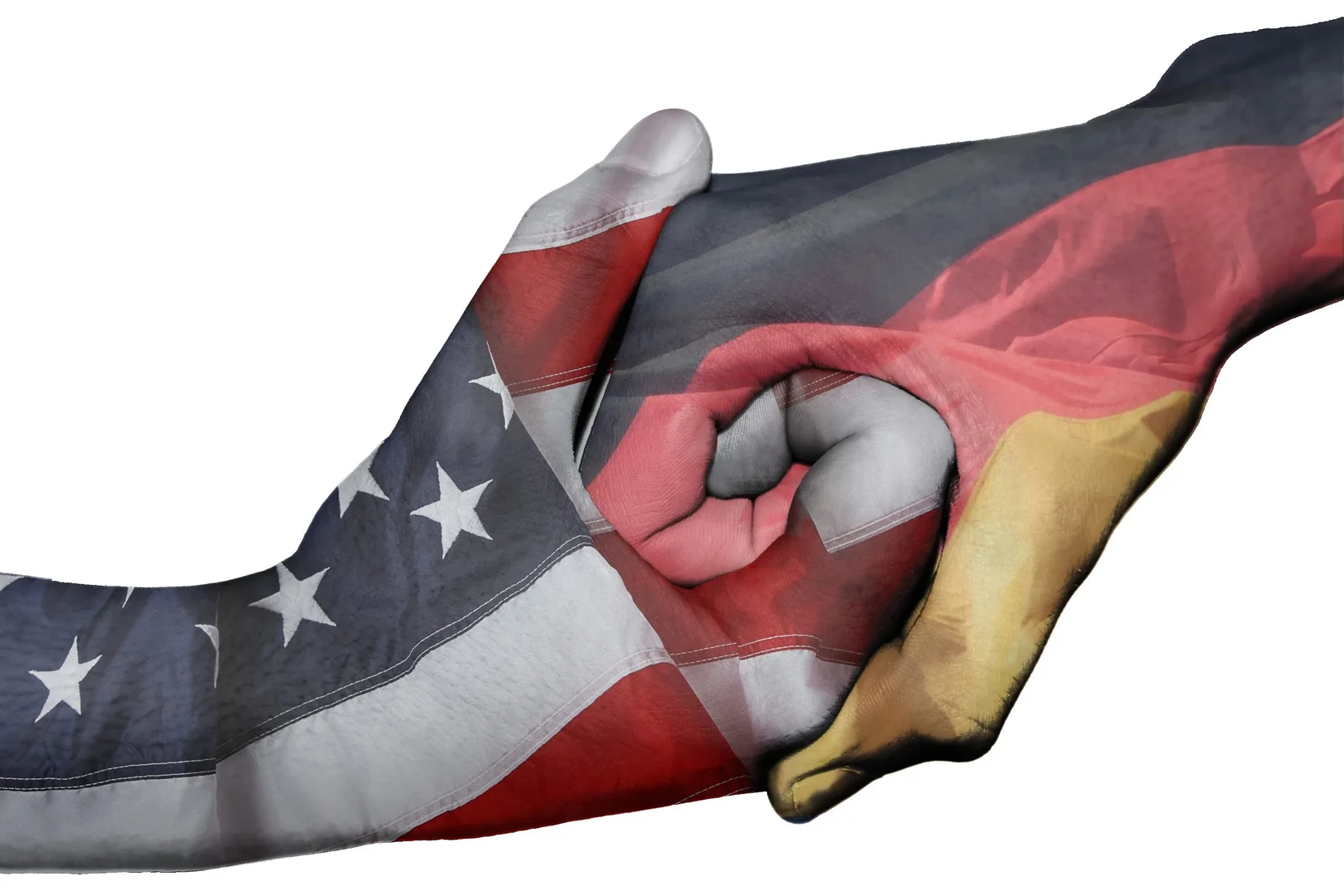
With this work, a comprehensive history of German-American relations is now available. Ohnesorge has examined all political and, above all, security policy aspects, as well as the economic and, not least, the cultural and personal dimensions of the fluctuating relationship between the two countries, under the magnifying glass of his central analytical criterion: soft power.
Although the completion of this work predates the ouster of the Venezuelan president and the recent escalation of the Greenland conflict, this very distance underscores Ohnesorge's perspective on an effective soft power strategy in 21st-century global politics.
Following and expanding upon the ideas of the late Harvard professor Joseph S. Nye, Ohnesorge defines soft power as follows: "It's about the ability to win others over and persuade them to want what you initially only want yourself. It's not about direct coercion like hard power, but about attraction and persuasion. The preferred methods are not threats or payments, but a strong attraction stemming from a community's values and culture, its policies, and its leadership," explains the Bonn-based political scientist. This includes the fact that power is always in motion, is exercised by different actors at different levels, and is at least partially beyond the control of government action.
Ohnesorge's study, based on an examination of five centuries of transatlantic relations and particularly focusing on the period since the end of the Cold War, demonstrates that soft power swings back and forth between the two countries like a pendulum. The publication, explains political scientist Ohnesorge, comes at a time when the current US president is squandering the United States' soft power—and with it, the formidable influence the US enjoyed over Germany for so long.
We are currently witnessing, Ohnesorge continues, how the US is rapidly losing soft power, a trend exacerbated by a president who seems increasingly focused on hard power. Ohnesorge recalls a warning issued by US President Harry S. Truman in June 1945, on the occasion of the signing of the newly formulated Charter of the United Nations: "We all must recognize—no matter how strong we are—that we must deny ourselves always doing only what pleases us."
In an increasingly interconnected world, Ohnesorge emphazises, cooperation is essential for tackling global challenges such as climate change, nuclear proliferation, and pandemics. Democratic, open societies are far better positioned for this than autocratic, closed ones. But even states with overwhelming hard power need alliances and partners – and they should not forget the power of soft power in the future.
The English-language work is written in a generally understandable style, is clearly structured, and supports the reading process with a comprehensive index and extensive source material.Professor Michael Cox, Professor Emeritus at the London School of Economics and Political Science (LSE), writes that Ohnesorge's recently published work is a brilliant, profound study of German-American relations, one that Nye himself would be justifiably proud of.