Report: Bonn Future LAb on Strategic Foresight
International Security Forum Bonn 2025 – Follow Up
Master of Arts in "Strategy and International Security" (MSIS)
H2 Reality Check
Report: Bonn Future LAb on Strategic Foresight
International Security Forum Bonn 2025 – Follow Up
Master of Arts in "Strategy and International Security" (MSIS)
H2 Reality Check

Our Mission

The Center for Advanced Security, Strategic and Integration Studies (CASSIS) is an interdisciplinary research center at the Rheinische Friedrich-Wilhelms-Universität Bonn in the field of strategic foresight, European and security policy research. Committed to the approach "Global Challenges Need European Responses", CASSIS contributes in interdisciplinary and inter-institutional work to develop, evaluate and publicly discuss European strategies to current challenges in the field of foreign and security policy. 

Our Partners

Since 2019, CASSIS has developed into an important platform for the transfer of academic expertise and knowledge on pressing strategic topics both to the academic and non-academic audiences through a range of our research and high-profile teaching and event formats. While doing so, we were able to receive invaluable support from our great partners. CASSIS is very grateful to their support and we are proud to be well connected to many wonderful institutions. Together with our valued and trusted partners, we are able to foster discussions on matters of strategic importance near and abroad and jointly conduct and advance important research projects.


Current
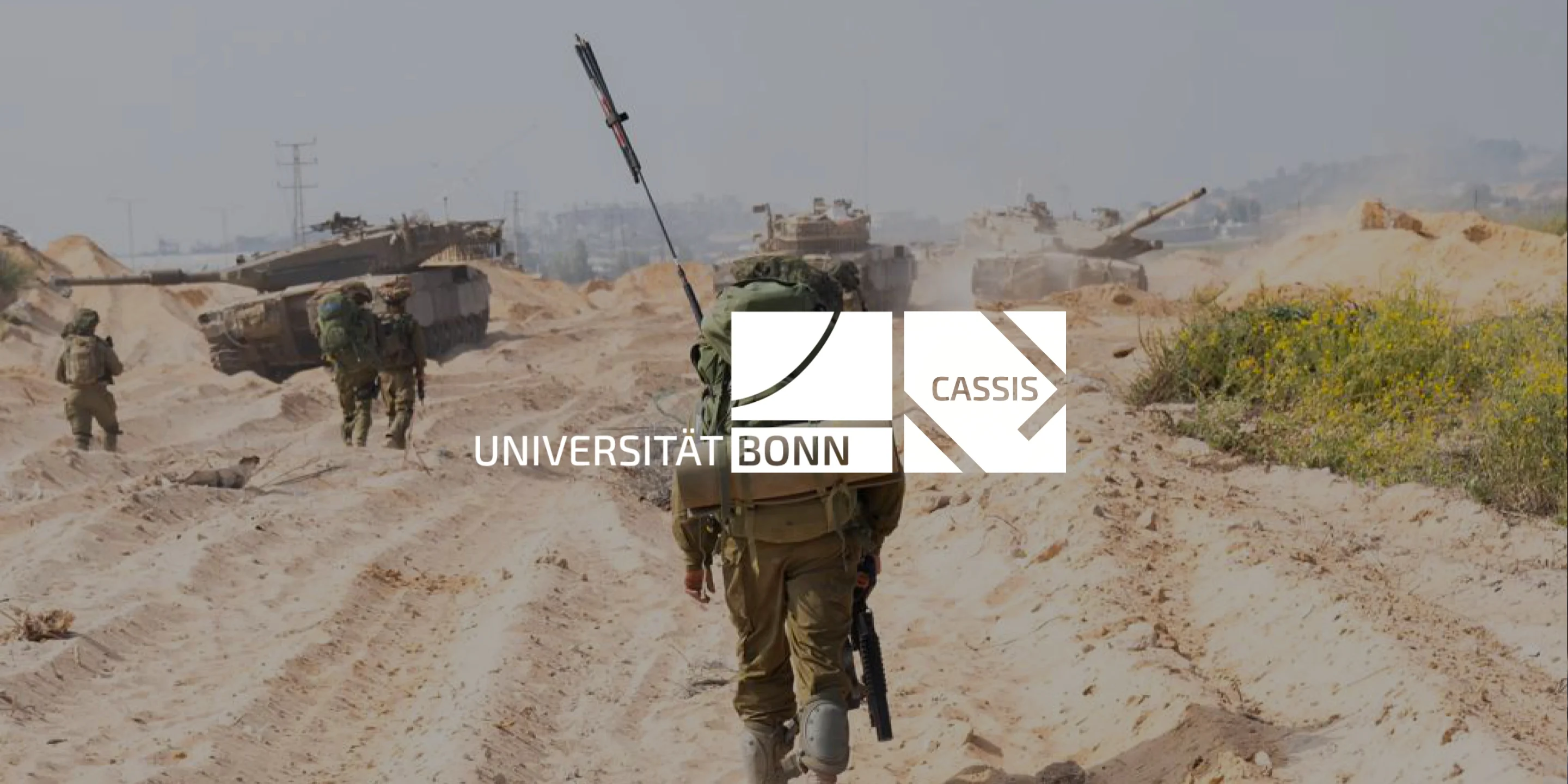
Dossier Middle East

The experts at CASSIS analyse the current conflict in Gaza and other escalations in the Middle East and offer relevant information on its context and background.

Dossier Ukraine

The experts of CASSIS offer in various formats from their interdisciplinary perspectives classification and analysis on the Russian attack on Ukraine and its background.

Dossier Ukraine
© CASSIS
ISFB23.jpg
© CASSIS

The International Security Forum Bonn 

The International Security Forum Bonn (ISFB) serves as a platform to convene distinguished international experts and practitioners of security and foreign policy to debate the future of transatlantic relations and key challenges in international politics. Held almost annually since 2016, the ISFB is the most important international security conference in North Rhine-Westphalia and all neighboring German federal states.


Our Focus

The content focus of CASSIS is, on the one hand, on the interdisciplinary engagement with traditional foreign and security policy topics such as interstate conflicts, competing international order systems, and a return of geopolitics, and on the other hand, on non-traditional security challenges related to space, cyber, climate, and energy security, terrorism, and human security.


Eine Wissenschaftlerin und ein Wissenschaftler arbeiten hinter einer Glasfassade und mischen Chemikalien mit Großgeräten.
© pixy.org
Vernetzte Sicherheit, globale Nachhaltigkeit.png
© NASA

Integrated Security and Global Sustainability

Lead:                                                     Prof. Dr. Volker Kronenberg
Prof. Dr. Wolfram Hilz 
Prof. Dr. Ulrich Schlie

Globus der den atlantischen Ozean zeigt
© Pixabay

Strategic Competition in Space

Lead:
Dr. Enrico Fels
Prof. Dr. Maximilian Mayer

Politik und Governance.png
© Unsplash

Global Infrastructures

Politics and Governance of Global Infrastructures


Lead: 
Prof. Dr. Maximilian Mayer

Challenge East Bild
© Evgeny Feldman

Challenge East - Handlungsstrategien der Europäer in der östlichen Nachbarschaft

Lead:                                                     Prof. Dr. Wolfram Hilz                         Prof. Dr. Andreas Heinemann-Grüder
Podcast Cover Spotify-3.png
© CASSIS

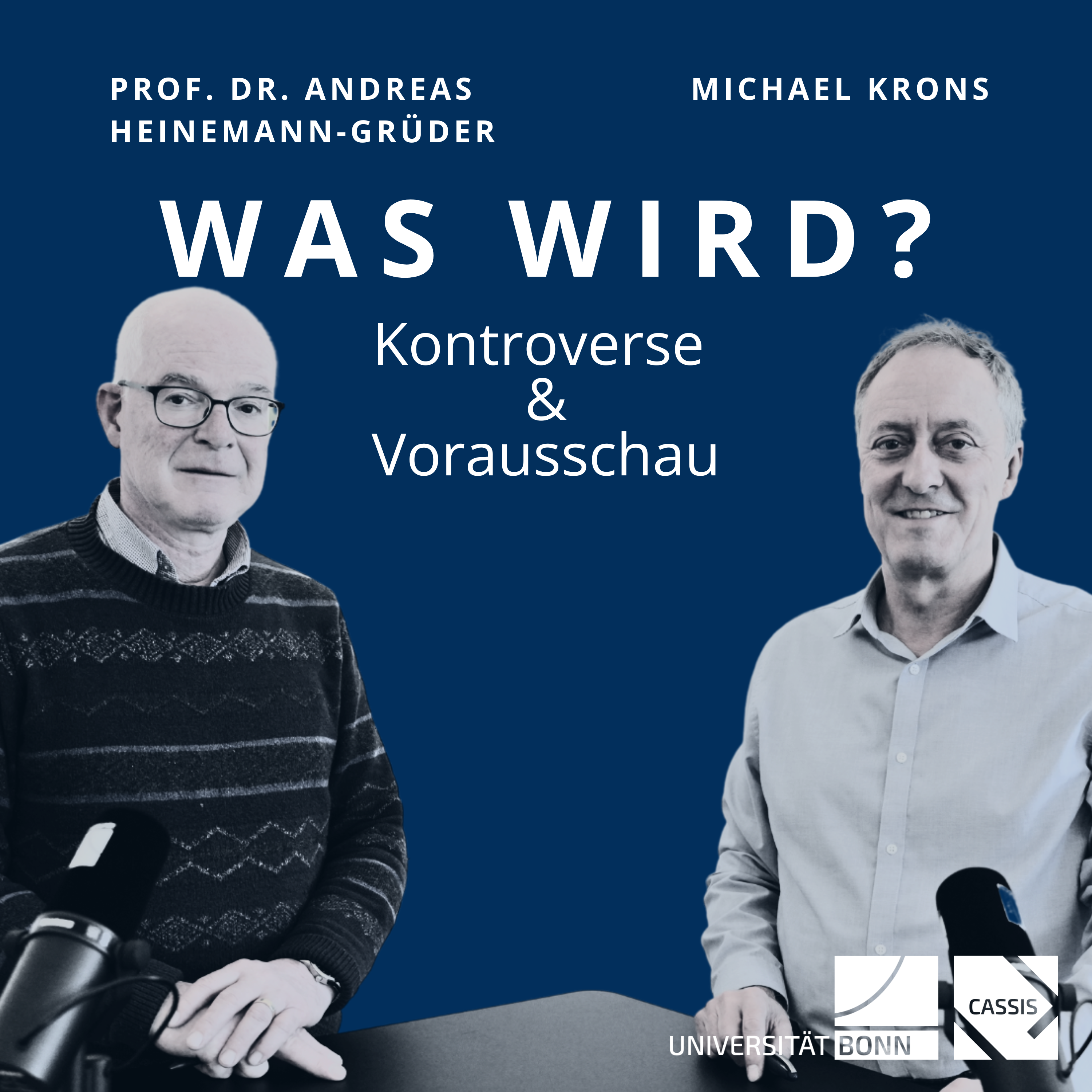
"Was wird?"-Podcast

At irregular intervals, CASSIS also hosts the "Was wird?"-podcast, together with Prof. Dr. Andreas Heinemann-Grüder and Michael Krons.

News
Das Ende der liberalen Ordnung und die Zukunft des Liberalismus
In the issue 3/2026 of the journal "WEITERDENKEN," published by Kohlhammer Verlag, Ulrich Schlie writes about the future of liberalism.
Christlicher Widerstand im Nationalsozialismus: Mit Bibel und Pistole im Bendlerblock
"Eugen Gerstenmaier gehörte zum Kreis der Widerständler, der das Attentat auf Adolf Hitler am 20. Juli 1944 geplant hatte. Der spätere Politiker und evangelische Theologe sah die Motivation für dieses Engagement auch in seinem Glauben begründet."
Ein strategischer Sonderfall?
The article by Prof. Dr. Ulrich Schlie on the topic of practice-oriented security and strategic research in German history and the present was published by SIRIUS – Zeitschrift für Strategische Analysen on September 3, 2026.
Open courses in the Katekisama program
In the Fall term of 2026, master's (and PhD) students at the University of Bonn will have the opportunity to participate online at courses at the Institute for European Global Studies in Basel.
Call for Applications: Internship, September through December 2026
The Henry Kissinger Professorship is looking for a dedicated intern for the period from September 15 to December 2026.
The Economic and Political Costs of Europe's Shrinking ICT Patent Share
Europe has lost ground, especially in patents for digital technologies. The data from the new policy brief, produced in cooperation with the Vodafone Institute, points to sharply rising dependencies.
Dr. Enrico Fels at the Roundtable LIVE at the ILA Berlin
Dr. Enrico Fels was a guest on Roundtable LIVE on June 11 at the International Aerospace Exhibition (ILA) in Berlin. The discussion, titled “Is Power Rewriting the Law?”, focused primarily on the security zones currently being established around space-based facilities and international space law.
Workarounding Tech Middle Power Cooperation in a Turbulent World
This book examines the growing role of “tech middle powers” and their cooperation patterns in a changing global order. It explores how middle powers navigate new forms of international collaboration amid three key trends: the shift toward minilateral informal cooperation, the “Easternization” of science and technology, and the intensifying geopolitical rivalry between the United States and China. Particularly the contributors analyze the emerging phenomenon of “workarounding”.
Current Media Contributions
Das Ende der liberalen Ordnung und die Zukunft des Liberalismus
In the issue 3/2026 of the journal "WEITERDENKEN," published by Kohlhammer Verlag, Ulrich Schlie writes about the future of liberalism.
Die große Merz-Rochade: Wer nicht ins System passt, muss gehen
On September 12, 2026, Prof. Dr. Ulrich Schlie wrote an article for TRT World about the severe crisis facing the CDU following its decisive election defeat in Saxony-Anhalt.
Christlicher Widerstand im Nationalsozialismus: Mit Bibel und Pistole im Bendlerblock
"Eugen Gerstenmaier gehörte zum Kreis der Widerständler, der das Attentat auf Adolf Hitler am 20. Juli 1944 geplant hatte. Der spätere Politiker und evangelische Theologe sah die Motivation für dieses Engagement auch in seinem Glauben begründet."
Dr. habil. Hendrik Ohnesorge discusses the significance of the 2026 US congressional elections
Dr. habil. Hendrik Ohnesorge appeared as a guest on phoenix on September 12, where he explained the political system of the United States and gave is assessment of the significance of the mid-terms elections in the US in November. 
Dr. Frank Umbach discussing the importance of a secure energy supply on ntv
CASSIS Fellow Dr. Frank Umbach spoke on ntv about the importance of ensuring a stable energy supply for critical infrastructure.
Dr. Frank Umbach discusses the threats facing critical infrastructure in Germany on ntv
Dr. Frank Umbach appeared as a guest on n-tv on September 4 and analyzed the complex new threat landscape that Germany's critical infrastructure is facing.
Dr. Frank Umbach discusses the hybrid threat to critical infrastructure on ZDF
In an article published on ZDFheute on September 8, Dr. Frank Umbach analyzed the most recent acts of sabotage targeting critical German infrastructure, particularly at two substations in early September, and what they mean for energy security of Germany.
Dr. Joachim Weber discusses the acts of sabotage at substations on RTL
On September 5, Dr. Joachim Weber spoke on RTL Nachtjournal about the acts of sabotage at German substations earlier that month.

Events

CASSIS offers a wide range of events on current foreign and security policy issues. 

Eine Wissenschaftlerin und ein Wissenschaftler arbeiten hinter einer Glasfassade und mischen Chemikalien mit Großgeräten.
© CASSIS
Upcoming events
Can we defend ourselves?
Institut français Bonn, ...
06:15 PM - 07:15 PM
While Donald Trump’s second term in office is placing a historic strain on transatlantic relations, Europe is currently facing pressure on multiple fronts. ...
Past events
Introduction to Strategic Wargaming
Römerstraße 164, 53117 ...
01:00 PM - 06:00 PM
How do shifts in power politics in the Arctic region lead to new partnerships or strategic dependencies? What geopolitical and geographical conditions must be ...
Transatlantic Fracture
Lennéstraße 6, 53113 Bonn
06:00 PM - 08:00 PM
The United States is reevaluating its place in the world, not only because of President Trump. The metamorphosis in American politics is affecting U.S. foreign ...
The Consequences of External Migration Management for the EU
Institut français Bonn, ...
06:15 PM - 08:00 PM
Migration has posed major challenges for Europe for years. The issue has the potential to divide entire societies, and starting this year, Europe is taking a ...
From Earth to the Stars – Turning Inspiration into the Future
German Space Agency, ...
06:00 PM - 08:00 PM
The fascination with space has always inspired human imagination – and it remains a powerful driver of curiosity, discovery, and technological progress. ...

Current Scientific Publications
Das Ende der liberalen Ordnung und die Zukunft des Liberalismus
In the issue 3/2026 of the journal "WEITERDENKEN," published by Kohlhammer Verlag, Ulrich Schlie writes about the future of liberalism.
Christlicher Widerstand im Nationalsozialismus: Mit Bibel und Pistole im Bendlerblock
"Eugen Gerstenmaier gehörte zum Kreis der Widerständler, der das Attentat auf Adolf Hitler am 20. Juli 1944 geplant hatte. Der spätere Politiker und evangelische Theologe sah die Motivation für dieses Engagement auch in seinem Glauben begründet."
Beyond the cultural trap: essentialism and the limits of Global International Relations
Over the past two decades, calls for Global, post-Western and relational reincarnations of International Relations (IR) have elevated culture, civilization and cosmology as resources for decentring Eurocentric canons and pluralizing theoretical vocabulary. Culture, however, is not self-explanatory. It is better understood as a web of historically situated practices, relations and creative acts through which communities negotiate meaning, contest authority and project themselves towards possible futures. When this dynamic, future-oriented and internally contested character of culture is ignored, a ‘cultural trap’ emerges.
Ein strategischer Sonderfall?
The article by Prof. Dr. Ulrich Schlie on the topic of practice-oriented security and strategic research in German history and the present was published by SIRIUS – Zeitschrift für Strategische Analysen on September 3, 2026.
The Economic and Political Costs of Europe's Shrinking ICT Patent Share
Europe has lost ground, especially in patents for digital technologies. The data from the new policy brief, produced in cooperation with the Vodafone Institute, points to sharply rising dependencies.
Workarounding Tech Middle Power Cooperation in a Turbulent World
This book examines the growing role of “tech middle powers” and their cooperation patterns in a changing global order. It explores how middle powers navigate new forms of international collaboration amid three key trends: the shift toward minilateral informal cooperation, the “Easternization” of science and technology, and the intensifying geopolitical rivalry between the United States and China. Particularly the contributors analyze the emerging phenomenon of “workarounding”.
Exploring Shenzhen’s state gig economy: The ‘eyes and ears’ of China’s smart state
China’s smart governance agenda is often narrated as the seamless quantification and automation of core state functions through AI, sensors, and integrated platforms. Using Shenzhen’s grid governance, we show that frontline operations remain labour-intensive and precariously staffed.
Brussels Needs a New Narrative on China-EU Relations
If Europe wants to reduce security vulnerabilities in its economic relationship with China, it must embed those policies within a strategically positive narrative.

Contact

CASSIS - Center for Advanced Security, Strategic and Integration Studies

Rheinische Friedrich-Wilhelms-Universität Bonn

Contact

+49 (0)228/73 3579

cassis(at)uni-bonn.de

Adress

4th Floor
Römerstraße 164
D-53117 Bonn

Wird geladen